This chawan features two distinct glazes. The golden glaze on the outside is my original recipe, the golden-yellow surface is created using iron that I personally collect and prosses from southern Utah. This same locally sourced iron is also used to produce a deep, rich glaze on the inside that appears black or brown depending on the light. That darker glaze is inspired by traditional Japanese Tenmoku styles.
The clay body is a 50/50 blend of stoneware and porcelain. The piece was wheel-thrown on my Japanese kick wheel and then carved on my kick wheel using wooden carving tools. After trimming, it was allowed to dry slowly for up to 10 weeks Once dry, its bisque fired to 1728°F. then glazed with the two glazes and glaze-fired to 2232°F.
This chawan features a Chadamari (the small indention in the bottom of the bowl.)
Dimensions: 2.75 inches tall, 7.5-inch rim. (dimensions are approximate)
This chawan features two distinct glazes. The golden glaze on the outside is my original recipe, the golden-yellow surface is created using iron that I personally collect and prosses from southern Utah. This same locally sourced iron is also used to produce a deep, rich glaze on the inside that appears black or brown depending on the light. That darker glaze is inspired by traditional Japanese Tenmoku styles.
The clay body is a 50/50 blend of stoneware and porcelain. The piece was wheel-thrown on my Japanese kick wheel and then carved on my kick wheel using wooden carving tools. After trimming, it was allowed to dry slowly for up to 10 weeks Once dry, its bisque fired to 1728°F. then glazed with the two glazes and glaze-fired to 2232°F.
This chawan features a Chadamari (the small indention in the bottom of the bowl.)
Dimensions: 2.75 inches tall, 7.5-inch rim. (dimensions are approximate)


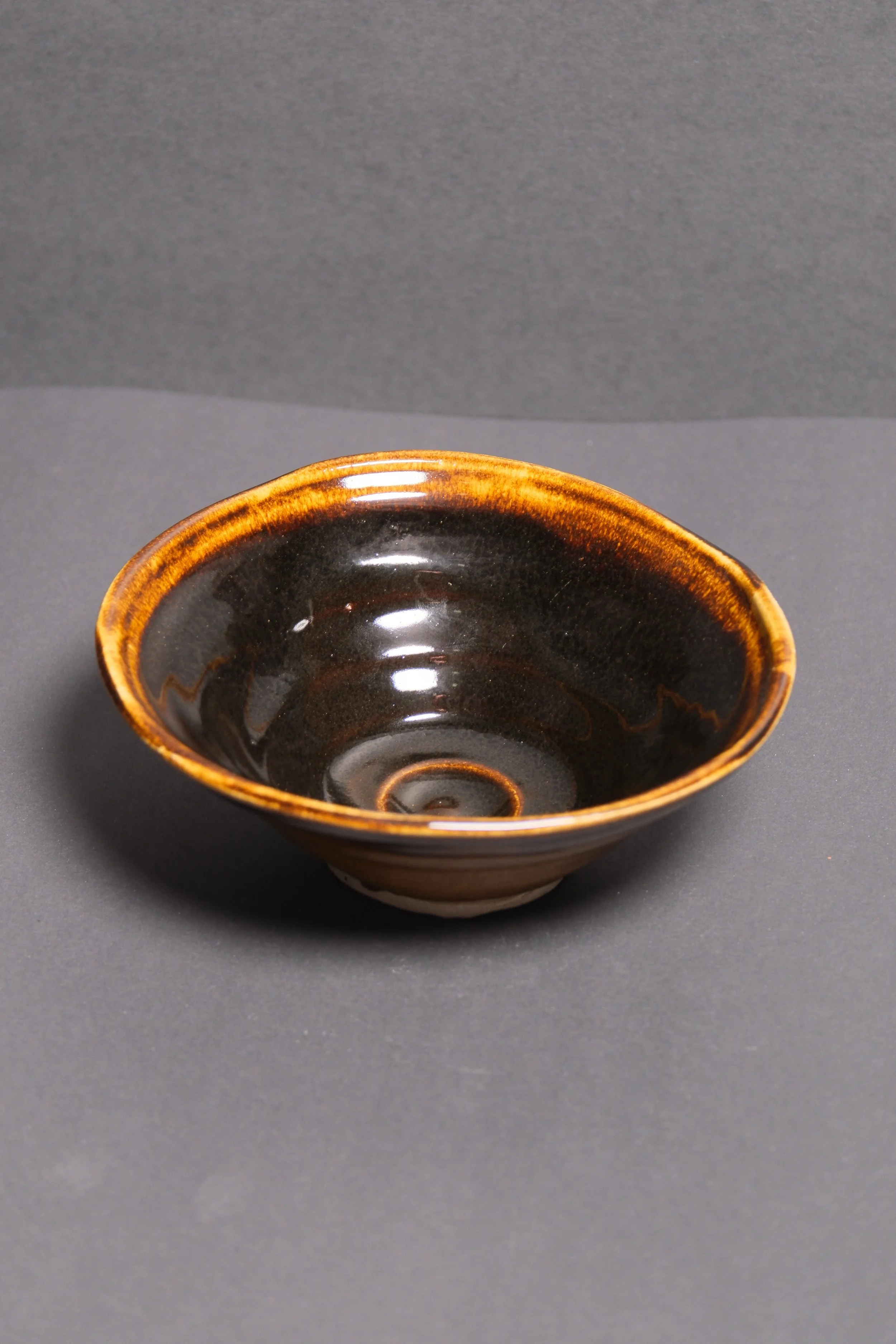 Image 1 of 6
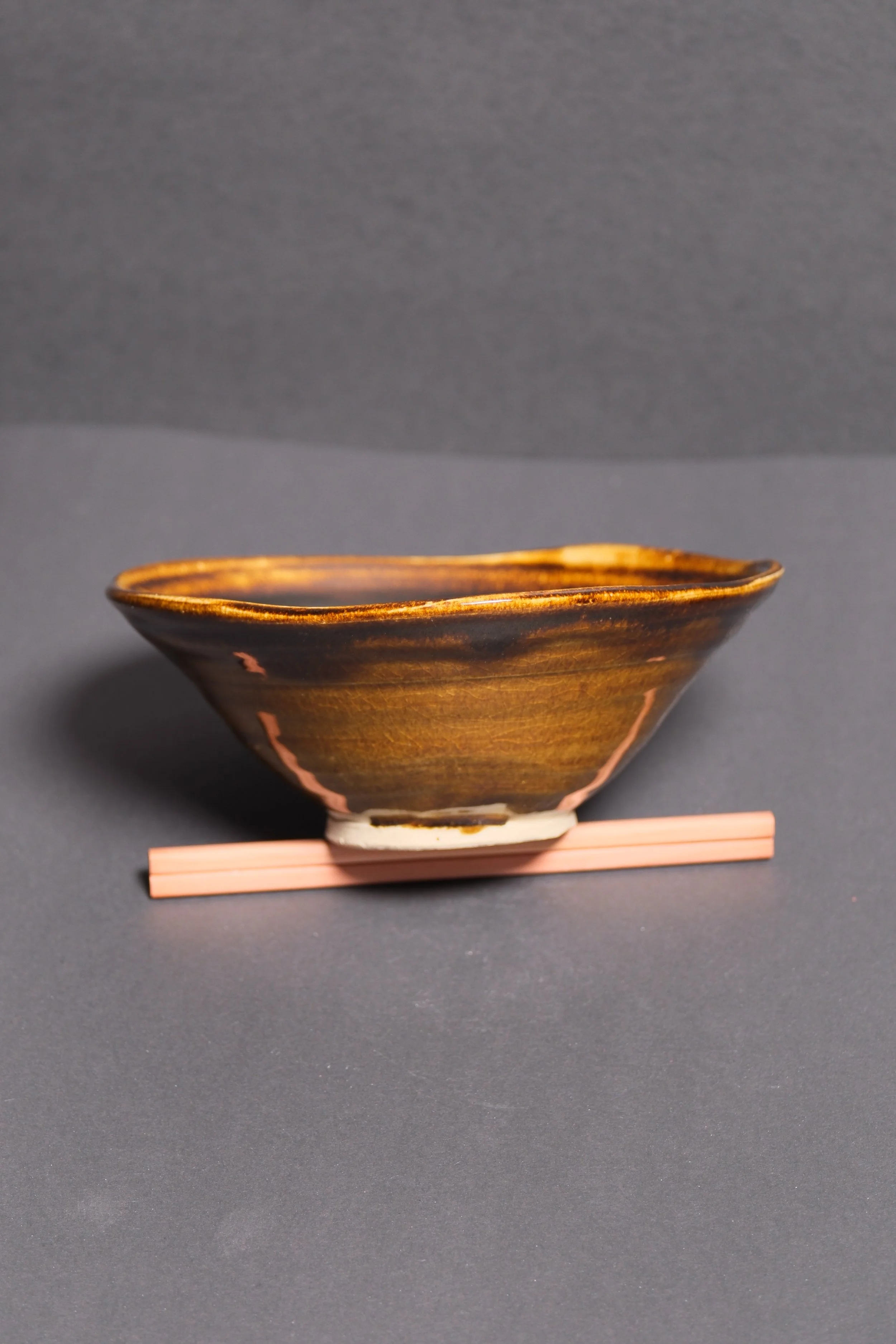 Image 2 of 6
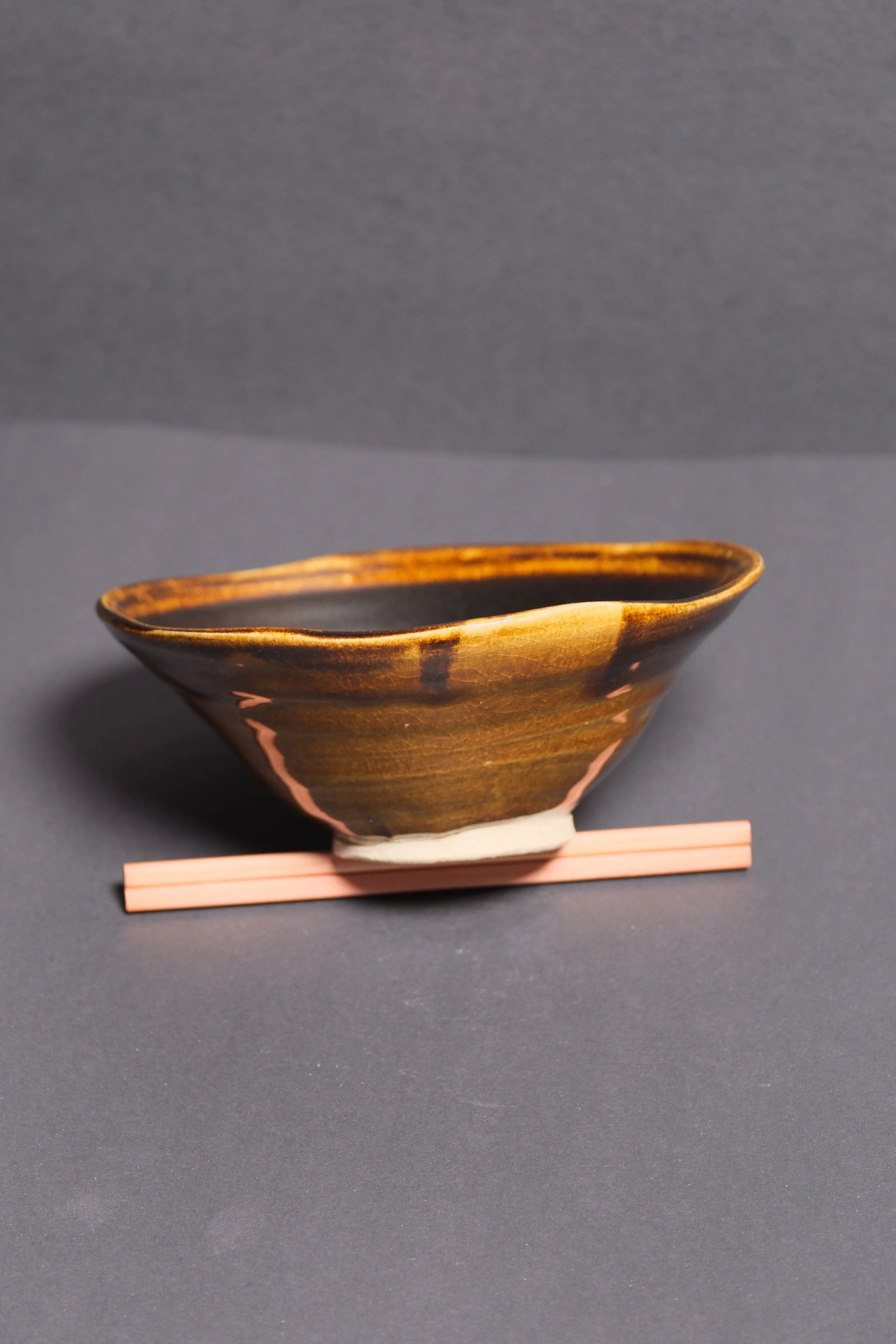 Image 3 of 6
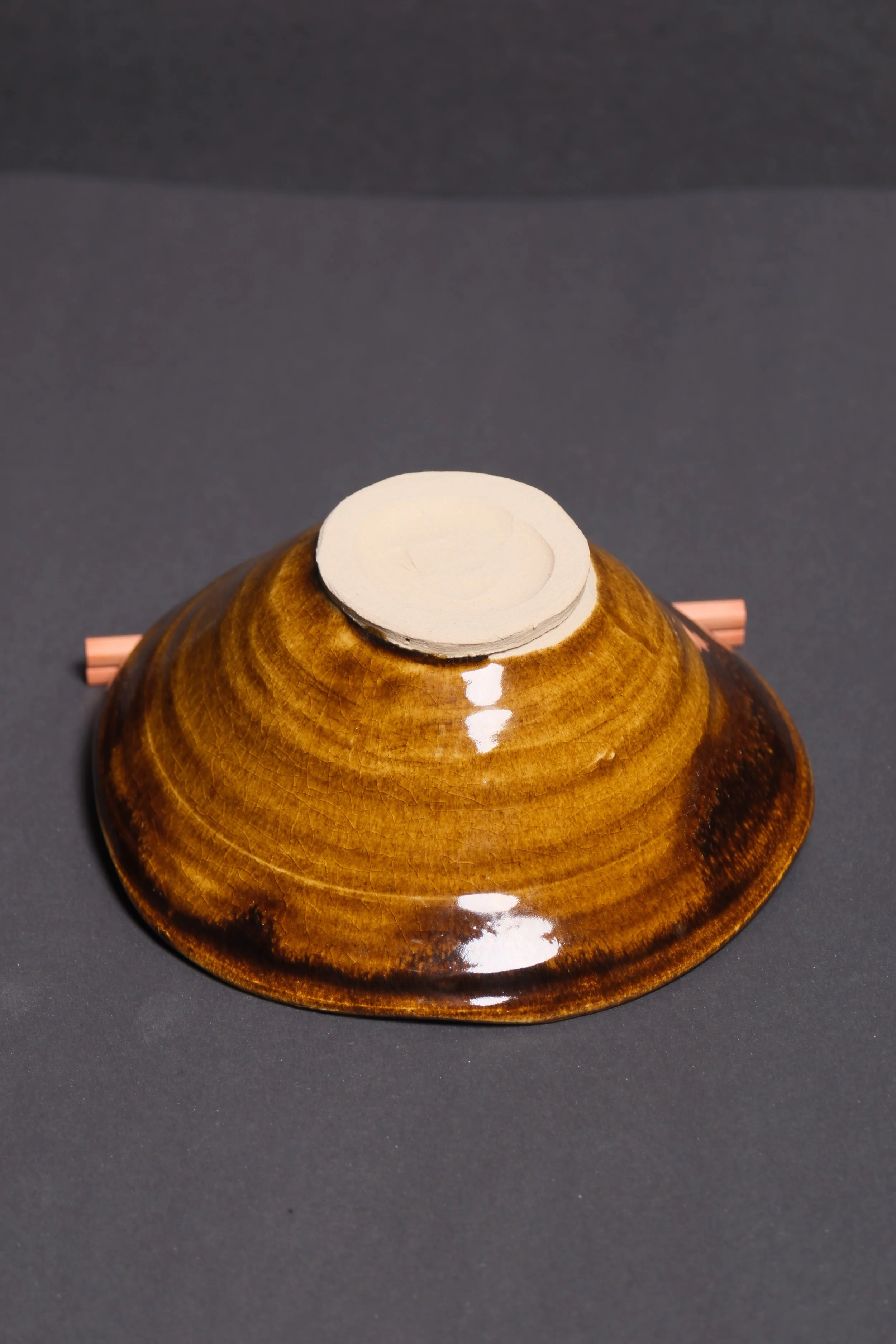 Image 4 of 6
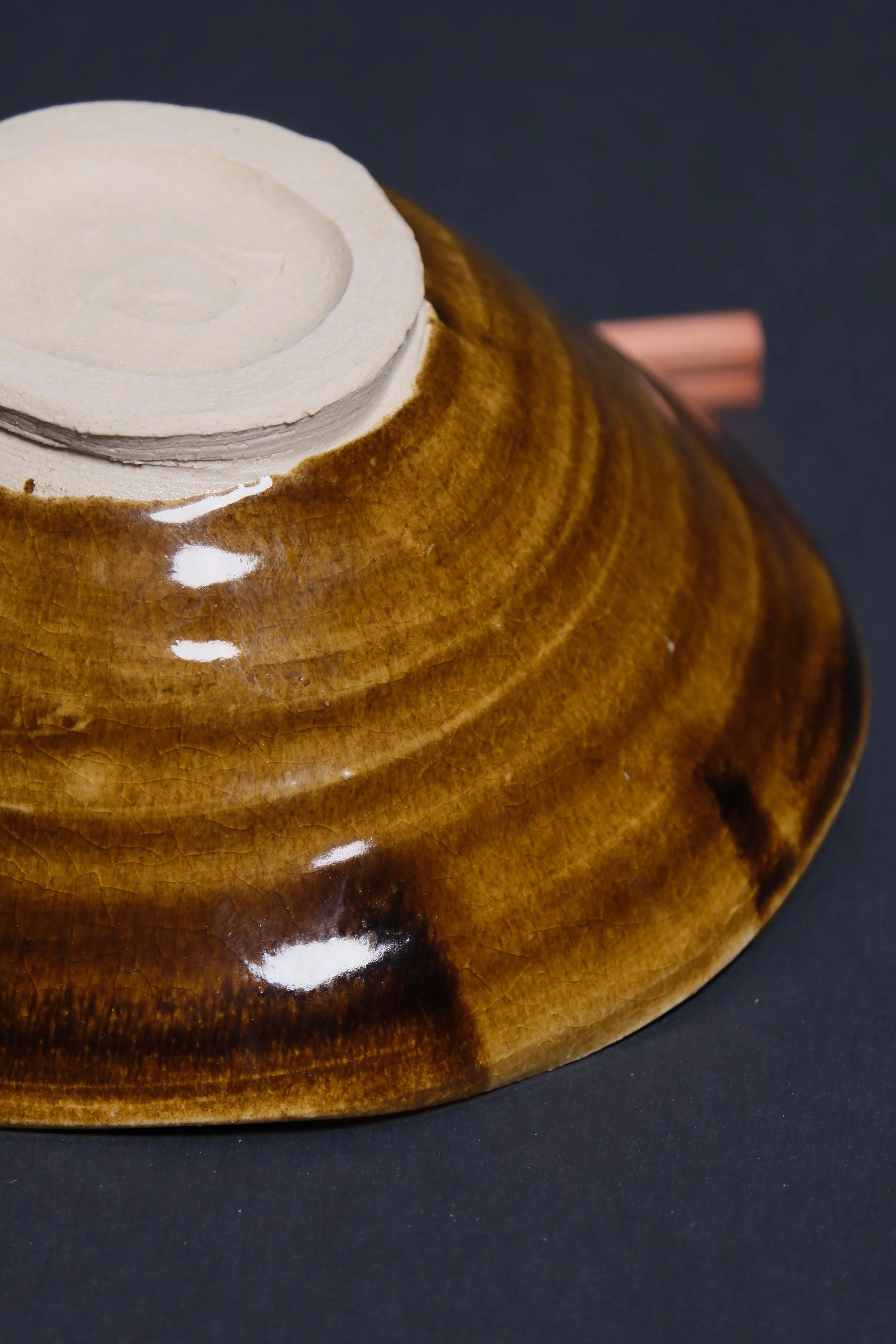 Image 5 of 6
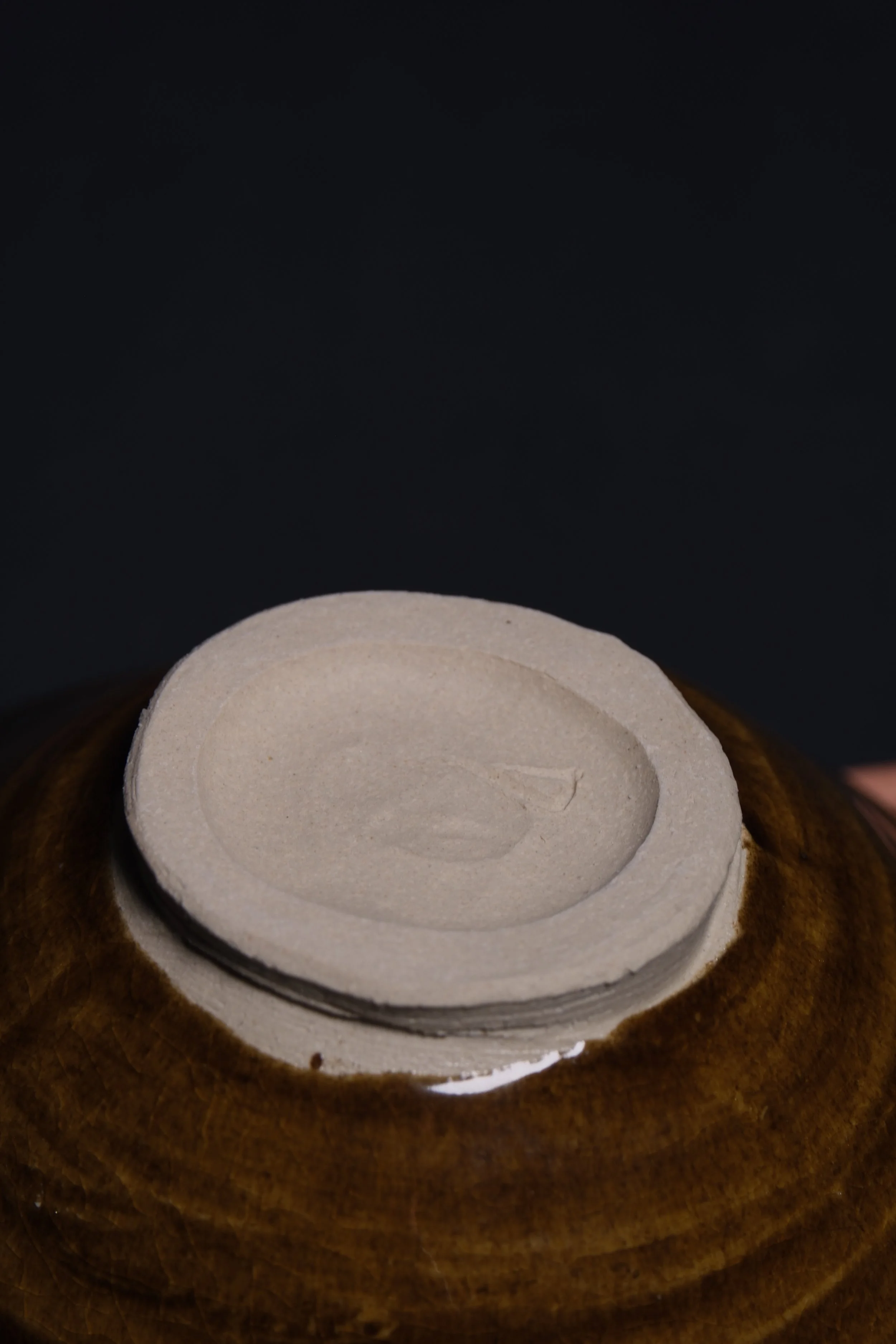 Image 6 of 6